Blog

  • How Hunting Season Impacts Turkey Tom Vocalizations and Activity

    How Hunting Season Impacts Turkey Tom Vocalizations and Activity

    As spring rolls in, it’s not just blooming flowers and warming weather that mark the season — it’s also the sound of gobbles echoing through the woods. Wild turkey hunting season is a highly anticipated time for hunters across the country, but have you ever wondered how hunter presence actually affects the behavior and vocal patterns of these sharp-witted birds?

    Let’s take a closer look at why turkey toms gobble — and why that might change when the woods get crowded with camo.

    The Science Behind the Gobble

    ale turkeys, or toms, gobble for one primary reason: to attract hens. It’s their way of saying, “I’m here, I’m strong, and I’m ready.” During the breeding season, which coincides with spring hunting season in many states, gobbling activity usually peaks. Toms will also gobble in response to crows, owls, thunder, and even other gobbles — it’s a high-stakes competition for attention.

    But gobbling isn’t just a romantic call. It also inadvertently gives away a tom’s location, making it easier for hunters to locate them. This is where the game changes.

    Pressure in the Woods: How Hunting Affects Gobbling

    When the hunting season begins, turkey behavior doesn’t stay the same. Increased human presence in the woods — whether it’s calling, walking, or setting up decoys — can significantly impact how much toms vocalize.

    Studies and field reports from seasoned hunters show a clear trend: turkeys become more cautious and gobble less frequently in areas with heavy hunting pressure. Here’s why:

    • Survival Instincts Kick In: Toms that gobble too much or too often often get harvested early. The survivors are usually quieter, more experienced birds that have learned to be wary.
    • Caller Saturation: With hunters mimicking hen calls all around, some toms may grow skeptical of responding to what might be a trap rather than a real mate.
    • Roost Relocation: Hunting pressure can cause turkeys to change their roosting and travel patterns, avoiding areas with frequent human activity.

    In short, the more pressure turkeys feel, the quieter and more elusive they become.

    The Early Bird Gets the Gobble

    f you’re a hunter hoping to catch that gobble-filled dawn chorus, the first few days of the season are typically your best bet. Toms are still vocal, actively searching for hens, and haven’t yet felt the full brunt of human interference. As the season wears on, gobbling tends to taper off, especially in high-traffic public lands.

    What Hunters Can Do

    Understanding how your presence affects turkey behavior can lead to more ethical and successful hunts:

    • Practice Stealth: Move quietly, limit excessive calling, and be patient. Sometimes less is more.
    • Scout Early: Find roost sites and travel corridors before the season opens to avoid unnecessary pressure.
    • Give Them a Break: If you notice turkeys going silent in a specific area, consider giving it a rest for a few days. Let the birds regain confidence in their environment.

    Final Thoughts

    Gobbling is one of the most thrilling parts of turkey hunting — it connects you to nature in a raw and visceral way. But with each step you take into the woods, you’re shaping the behavior of the very creatures you’re pursuing. Whether you’re a seasoned hunter or a newcomer, understanding how hunting pressure affects turkey toms can make you a more responsible and effective outdoorsman.

    After all, in the turkey woods, silence isn’t always golden — sometimes it’s just a sign they’ve been paying attention.

  • From Campfire to Book, A Hunting Tale History

    From Campfire to Book, A Hunting Tale History

    It is hard to say when and who told the first hunting tale, but Adam & Eve, after partaking in the forbidden fruit, became the first hunters, using animal skins with which to hide their nakedness. Then, only ten chapters into The Holy Bible, we learn Noah’s great-grandson, Nimrod, was “a mighty hunter before the Lord.” The word “Nimrod” translates to “a skillful hunter.” Despite the lack of opportunity for taking turkeys, surely, Nimrod could tell a good hunting tale! As turkey hunters, we yearn to tell our stories. There are over 400 first-edition turkey hunting books that do exactly that, and the recent Turkey Hunter magazine (which sadly only lasted for two issues was at least the 6th magazine published exclusive to turkey hunting. 

    Telling stories may be the most rewarding part of any hunt. It is our way to remember, celebrate, and honor the turkey that lost…or won…that round. Imagine if you could never talk to anyone about hunting ever again. Ouch! It certainly would cut down the amount of enjoyment we get in reliving those precious moments with family and friends. For you aspiring authors who are considering putting your turkey stories into print, here is some history on hunting books and the evolution of wild turkey literature that you might enjoy. Your stories could become part of that tradition!
    Hunting is something we share with our ancestors, though our methods and reasons may differ now. The Epic of Gilgamesh, dating to ~2100 B.C. is among the first writings known, and even that early text contained a hunter as part of the story. This Mesopotamian (vicinity of modern-day Iraq) book was, by no means, the first attempt to record the thrill of the hunt. Storytelling has been part of our culture since the first campfire, and a way for communities to preserve knowledge and celebrate events and people. Cave drawings and paintings were an expression of our art and identity, and once again, hunting was at the forefront.

    Reading serves a host of purposes, including entertainment and learning. Certainly, being able to put stories into a book improved upon the limitations of having to relay a story person to person (though the best stories are arguably still told in person by masters like Tom Kelly, Preston Pittman, and Cuz Strickland!).  Reading books is a way we better ourselves or indulge in things we enjoy. The written word dates back 5,000 years to the Mesopotamians and Egyptians, who developed symbols to express thoughts and objects. The development of writing created the ability to record, transport, and share stories outside of one’s walls and community. Tablets, scrolls, and books were all originally individually handmade, a laborious affair that also limited a book’s best-seller status (ha!). The Greeks and Romans pursued and recorded leisure activities, including hunting. Of course, we don’t have any turkey hunting stories from them, given the 4,000 miles (and most of it ocean) between them and our North American turkeys!

    In 1454, Johannes Gutenberg’s new printing press turned out the now famous Gutenberg Bible, the first ‘printed’ book. If you have one, do not throw it out, as it is worth up to a cool 35 million dollars! Literacy rates were an early barrier to books, making them primarily academic, religious, and luxury items. The Puritans that came to the New World placed a high value on reading, thus, literacy was higher in the American colonies even than in Europe (the pen was truly mightier than the sword!).  We do have ample records of hunting in North America, starting with the Spanish then the other Europeans, who were generally astounded by the natural resources and game they encountered. Wild turkeys figured highly into these records. Albert Hazen Wright researched letters, journals, books, and official records that mentioned turkey hunting going back to the 1500s and published his findings in 1914-1915 as Early Records of the Wild Turkey in the ornithological journal The Auk. It is a brilliant historical record of the wild turkey in America. The Wild Turkey And Its Hunting, in 1914, became the first book dedicated to our sport. Written by Charles Jordan, his manuscript was edited and published after his death by Edward A. McIlhenny.

    Good hunting books are now in ample supply, and many from the last century have become classics. Among them, Robert Ruark’s The Old Man and the Boy and the uproarious humor of Patrick F. McManus in the books compiled from his magazine articles are highly recognizable.  Where the Red Fern Grows by Wilson Rawls has sprung leaks in the eyes of generations of young hunters. Savvy readers will know of classic African and American hunting books written by Roosevelt, Buckingham, O’Connor, and Hemingway. Although not hunting books in the storytelling sense, Sand County Almanac by Aldo Leopold and the more recent Beyond Fair Chase: The Ethic and Tradition of Hunting by Jim Posewitz are books that every hunter ought to read…more than once. Such books are thought-provoking and reinforce that the joy and challenge of hunting should not stem from killing, trophies, records, and slams. As hunters, we are cognizant that we must find a balance in that what we do and how we do it is responsible. With the wild turkey population sadly in decline, we all might benefit from shooting one less gobbler every year and reinvesting some of that time and passion in reading some of the great turkey hunting literature available. 

    With the ease of self-publishing platforms, the writing of turkey hunting books is at an all-time high, with a new one coming out at a pace of about one a month. In addition to the hundreds of books dedicated to wild turkey hunting that have been written, there is an even greater number of scientific and management publications. I won’t go as far as to say that any of these storytelling or management books will guarantee to make you a better turkey hunter, but if one reads the generations of tips and information recorded there, the chances are good you’ll find yourself applying something new in the woods. 

    If you want to tell your turkey hunting stories, my best advice is to start by understanding the “gold standard” for turkey literature. Get copies of the Henry Davis book The American Wild Turkey, Tom Kelly’s masterpiece, Tenth Legion, or the more recent gems, Memories of Spring by Ron Jolly and Letters To My Grandsons by Larry Proffitt.  Read them, and you’ll see the art of storytelling in grand fashion. Don’t overlook the authors and articles in publications like this magazine; as a boy, outdoor journalists first captured and solidified my interest in hunting tales with their articles and accompanying photos in the pages of the hunting magazines I wore out.

    The future of telling our tales looks promising despite the competition from digital media. I admit to enjoying YouTube hunting videos, but I find a book that goes beyond the limits of video in capturing thoughts, insights, and emotions.  Even as retail stores are declining, the convenience and cost-effectiveness of browsing and purchasing books online and sending them to your home is sustaining books as a story-telling platform. A September 2021 report from the U.S. Book Industry says, “Print book sales figures have improved, and unit sales now consistently surpass 650 million per year. Print also remains the most popular book format among U.S. consumers, with more than 60 percent of adults reading a print book in the last twelve months.”  Given that there are 2.5 million turkey hunters, if they read at that 60 percent rate, then there are 1.5 million potential customers for our tales! That is inconsistent with what any wild turkey book author has experienced, as selling even a few hundred books can take considerable effort. 

    Some hunters write more for themselves, to record their memories, or to share them with close friends and family. Often, those books have been published in a limited run, making them very collectible for turkey literature enthusiasts, and can be valued at a few hundred dollars. Exceedingly rare original printings of vintage books, like Tom Turpin’s Hunting The Wild Turkey, can fetch thousands of dollars! Most of those authors would be shocked to learn that the book they gave away or struggled to sell has gained such appreciation. Regardless, many authors find the real value in writing a book is in how it can be therapeutic and enjoyable to see their stories in print…and many of us enjoy reading them. If you are reading this magazine and this article, chances are you are a turkey hunter, which means you are familiar with the grand tradition of telling turkey tales. We’d love to hear yours!
  • How To Hunt Fall Wild Turkeys

    How To Hunt Fall Wild Turkeys

    In this day and age of struggling turkey populations across many parts of the country, fall turkey hunting has become a target for concern among hunters. As hunters, we love the sound of hard gobbling turkeys during the spring. There’s nothing more exciting than an epic spring turkey hunt with gobblers on a mission of destruction, seemingly for every minute of the day. Let me make it clear—I absolutely love spring turkey hunting. But a good fall turkey hunt can get your blood pumping just as much as any spring hunt. I’ll leave the debate on the population impacts of fall hunting to the professionals. For more on that subject, check out the *Turkey Season Podcast* episode *State of the State Tennessee*, where Dr. Bradley Cohen provides some insight into the science behind fall turkey hunting impacts.  

    In this day and age of struggling turkey populations across many parts of the country, fall turkey hunting has become a target for concern among hunters. As hunters, we love the sound of hard gobbling turkeys during the spring. There’s nothing more exciting than an epic spring turkey hunt with gobblers on a mission of destruction, seemingly for every minute of the day. Let me make it clear—I absolutely love spring turkey hunting. But a good fall turkey hunt can get your blood pumping just as much as any spring hunt. I’ll leave the debate on the population impacts of fall hunting to the professionals. For more on that subject, check out the *Turkey Season Podcast* episode *State of the State Tennessee*, where Dr. Bradley Cohen provides some insight into the science behind fall turkey hunting impacts.  

    In many states with a fall season, hunters are permitted to harvest any wild turkey—hens, jennies, jakes, and gobblers are all fair game. However, states like Tennessee and Alabama have a gobbler-only season, leaving hens and jennies off the harvest list. For more details, check out the *Turkey Season Map* for fall hunting regulations in your state. Many states across the country also allow the use of dogs for hunting turkeys in the fall. The dogs use their keen sense of smell to locate large flocks of turkeys and then scatter the flocks. Hunters set up at the scatter site and call the turkeys to reassemble, providing an opportunity to harvest a fall turkey. This type of hunting involves a lot of calling and action, which can last for hours or even days as the flocks come back together. If you ever get the chance to hunt fall turkeys behind a turkey dog, I highly recommend it—it’s a wild experience you won’t forget. 

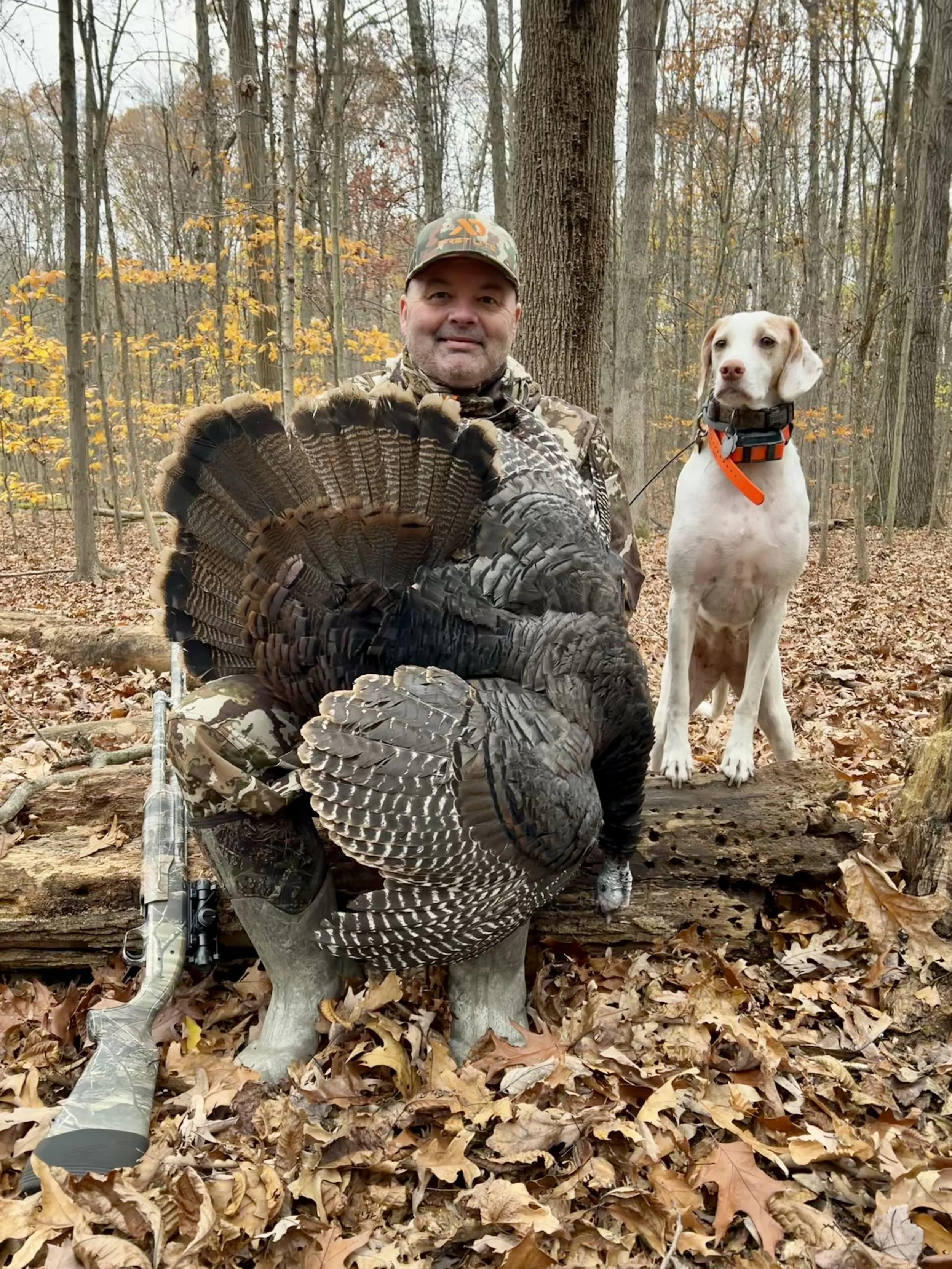
    Brett Barry, a legendary Fall Turkey from Ohio and his Turkey dog Josie on another successful Fall hunt. 

    Fall hunting is a different experience from spring hunting. Some of the methods you use in the spring might not work as well in the fall. While some springtime strategies can still be effective, standing on a ridge top owl-hooting for gobblers might not work as well in the fall. The success rate is much lower because fall gobblers aren’t as aggressive or temperamental as they are in the spring. Gobbling activity is reduced, but the longbeards are still vocal, yelping and clucking along with other quieter sounds. 

    Although gobblers may not be as chatty, the hens more than make up for it. Turkey talk in the fall woods is non-stop if you’re near a large flock. Honing your skills as a fall turkey hunter will ultimately make you a better spring hunter.

    Every spring turkey hunter knows what’s on the mind of springtime toms. But as the breeding season fades, a gobbler’s focus shifts back to food and roosting, making him harder to hunt. His mind, no longer clouded by the drive for love, is sharp, and he’s focused solely on survival. As fall hunters, we can exploit two weak points in fall gobblers: their constant search for changing food sources and the curiosity that all turkeys are born with, which has cost many a turkey its life.  

    In Ohio, over 40% of fall turkeys are taken with archery tackle. While there are likely some diehard turkey hunters pursuing them with a bow, I’m willing to bet most of those turkeys were taken by deer hunters in tree stands who happened to have a flock of turkeys walk by. That’s perfectly legal, and if that’s how you want to hunt a fall bird, go for it. But to me, that’s the most boring way to hunt a fall turkey. We won’t be “deer hunting” turkeys in this article! There are two primary methods to hunt fall turkeys, both offering different experiences for the hunter. 

    Scattering Flocks

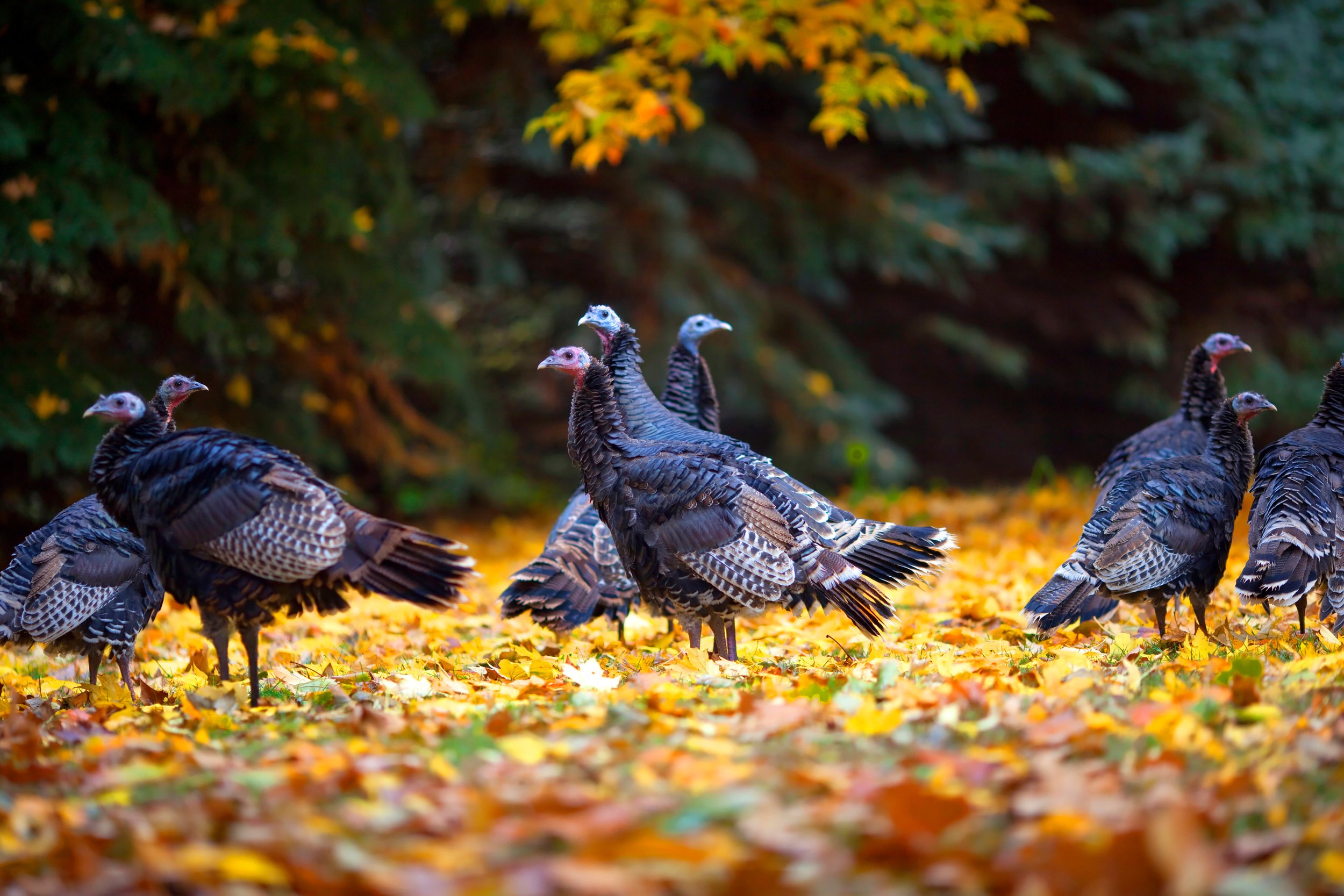
    A flock of hens in the Fall will provide the hunter with some exciting hunting opportunities. 

    Turkeys naturally form larger flocks in the fall. Hens and the young of the year can form massive groups—I’ve seen flocks of over 100 birds. Jakes from the spring, still maturing, will remain in the hen/poult flocks, while gobblers tend to form smaller groups. As with any type of hunting, preparation and scouting are key. Turkeys make a mess in the woods, turning over leaves in search of acorns and bugs. Once you find an area where they’re feeding, listen carefully for the flock’s chatter, which can be constant. 

    The main aspect of the scatter method is finding a flock, then running toward them (with your shotgun unloaded) to scatter the turkeys. A successful scatter sends birds in all different directions. If they all go one way, they’ll regroup quickly, and your shot opportunity may be lost. After scattering them, sit with adequate concealment and call the flock back together. As the birds reassemble, the action can be non-stop, providing plenty of excitement and a potential shot. 

    Listen-Stalk-Call

    I’m sure there’s an official term for this style of fall turkey hunting, but I just call it hunting fall turkeys—it’s my favorite way to hunt them. If you’ve spent enough time in the spring woods, you probably have a good idea of where turkeys like to be. Start your fall hunt in areas with white oaks or other favorite food sources. Walk ridge lines and look for disturbed leaf litter, a sure sign turkeys have been feeding. Old-timers claim hens feed on the main forest floor while gobblers pull leaves from the base of trees. Whether fact or legend, it’s a tip I trust.

    Once you locate fresh feeding sign, you’re in the game. Take a high vantage point to listen, and call often to elicit a response. Gobbler yelps, slower and lower-pitched than hen yelps, are effective for calling gobblers, and gobbling can sometimes provoke a fight response, bringing the flock to you. As you move toward responding gobblers, keep calling to maintain their interest. Fall gobblers may either come in ready for a fight or move on, but both scenarios offer shot opportunities. The same strategy works for hen and poult flocks—using a kee-kee call with excited yelping will often draw hens looking for their lost turkey. 

    Fall turkey hunting provides hunters with a unique challenge and a lot of fun. Going into it with the mindset that the experience is completely different from spring hunting is key. Understanding your role in the larger picture of population management is important, especially when deciding whether to harvest hens or young turkeys. Fall hunting is steeped in tradition—it’s where our turkey hunting heritage began in this country. If you can hone your woodsman skills and succeed in the fall woods, you’ll be a better hunter in the spring.